
Precise Layouts That Define Clean Rooms
Tile Installation in Twin Falls for floors, showers, backsplashes, and feature areas where grout lines stay straight and surfaces resist moisture
Campos & Co. handles tile installation throughout Twin Falls and surrounding areas, serving homeowners who need waterproof surfaces, durable flooring, and finishes that hold up under daily use. You reach out when a bathroom requires a full shower surround, when kitchen backsplashes need to protect drywall from water and heat, or when you want large-format tile that minimizes grout lines in open living spaces. Each installation begins with substrate preparation, ensuring the underlayment is flat, stable, and appropriate for the tile type you have selected.
Tile work involves measuring and marking layout lines to center patterns, avoid narrow cuts along visible edges, and align grout joints across multiple surfaces. Twin Falls projects often include porcelain and ceramic tile for wet areas, natural stone tile for entry floors, and glass or mosaic tile for accent walls. Substrate choices depend on the application, with cement board used in showers, uncoupling membranes over wood subfloors, and mud beds for sloped shower pans.
If you are considering tile installation in Twin Falls or nearby communities, contact us to discuss material options and site-specific preparation needs.
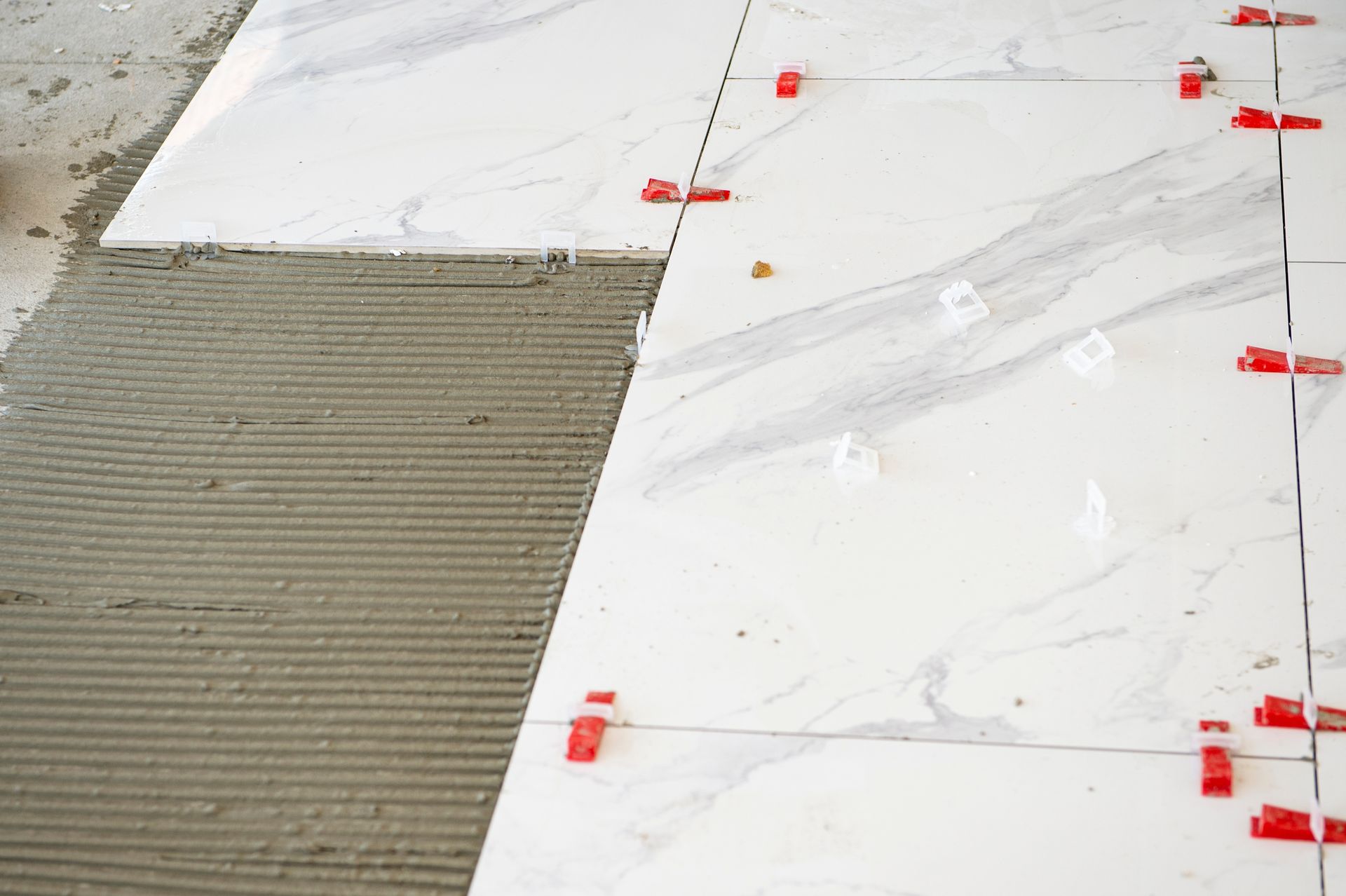
What You Notice After Tile Is Set
You receive level floors, plumb walls, and grout lines that run true across the entire surface. Tile installations include waterproofing membranes behind all wet-area tile, expansion joints at transitions, and properly sloped shower floors that drain without puddling. Each tile is back-buttered when necessary to ensure full adhesion, and lippage is controlled using leveling systems during the curing period.
After completion, you will notice the absence of hollow spots when you walk across the floor, the sharp transitions where tile meets other materials, and the uniformity of grout color once it has been sealed. Campos & Co. uses epoxy grout in high-moisture areas for stain resistance and standard cement grout with sealed joints in dry applications.
Each project includes a final wipe-down to remove haze and a grout sealing step once curing is complete. Large-format tile requires trowel techniques that prevent voids under the tile body, and rectified edges allow for tight grout joints. Natural stone tile may need pre-sealing to prevent grout staining, and certain installations require movement joints to accommodate seasonal expansion in the substrate.
Questions About Tile Work and Installation Steps
Homeowners in Twin Falls often ask about tile selection, grout choices, and how long installations take. These answers cover the decisions and steps involved in most tile projects.
What determines whether a floor needs an uncoupling membrane?
You install an uncoupling membrane over wood subfloors or any surface prone to movement, which isolates the tile from substrate shifts and prevents cracking.
How long before you can walk on newly installed tile?
You can walk on most tile floors after 24 hours, but grout curing takes 72 hours before exposure to water, and full adhesive cure requires a week.
Why do grout lines sometimes vary in width?
Grout joint width adjusts to the tile type, with larger tiles requiring wider joints to accommodate slight size variation and natural stone needing joints that allow for irregular edges.
When should tile be sealed?
You seal natural stone tile before grouting to prevent staining, and you seal grout joints in all installations two weeks after grouting once moisture has fully evaporated.
How is a shower pan built for tile?
A mortar bed is sloped to the drain, a waterproof membrane is installed over the slope, and a second mortar layer is placed before tile is set, ensuring water flows to the drain without pooling.
Campos & Co. works throughout Twin Falls to complete tile installations that perform as well as they look. Reach out to review tile samples and confirm your project timeline.